
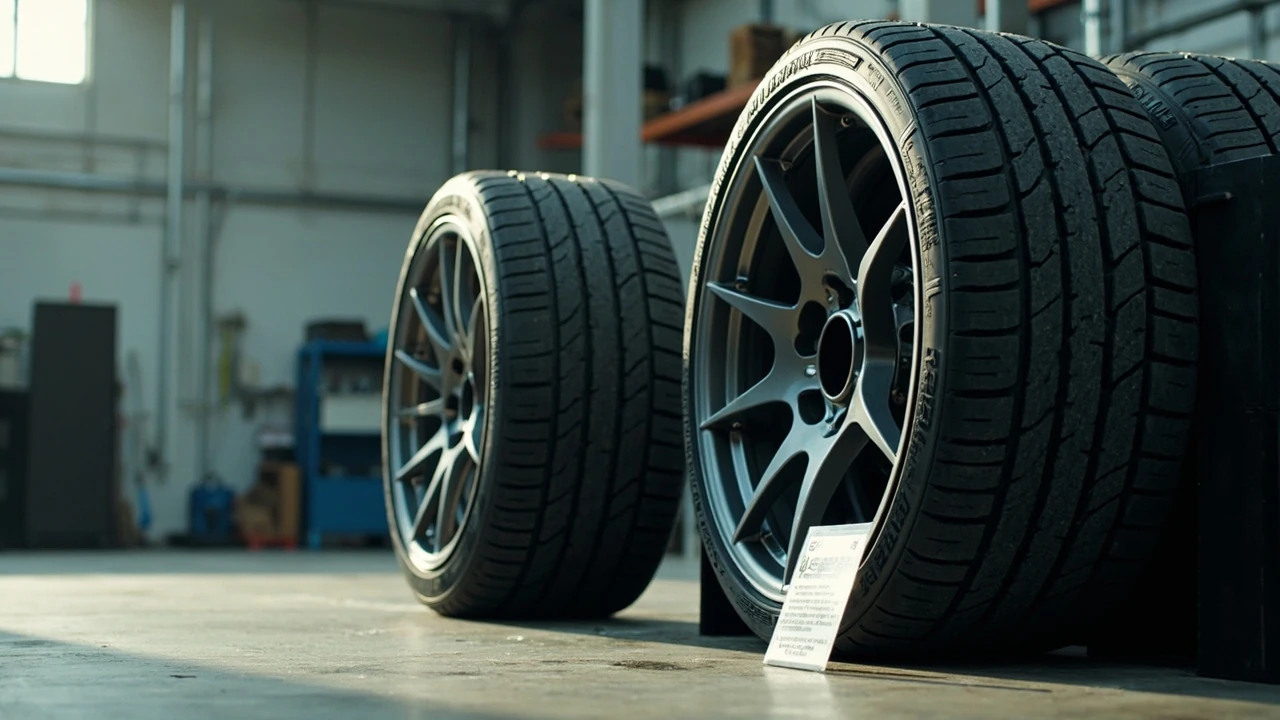

What 275/50r22 means
If your tire placard lists 275/50r22, you need more than a general idea of the tire’s width. The size code describes a tire that is 275 millimeters wide, has a sidewall height equal to 50 percent of its section width, uses a radial construction, and is designed to mount on a 22-inch wheel. Those dimensions affect clearance, ride quality, steering feel, load capacity, and whether the tire will fit your vehicle safely.
The first three numbers do not tell you the exact tread width from edge to edge. They identify the tire’s nominal section width, which is a standardized construction measurement. The 50 is an aspect ratio, not the tire’s speed rating or load index. The letter R identifies radial construction, while 22 is the wheel diameter in inches.
Understanding each part helps you compare like with like. It also makes it easier to recognize when a seller has supplied a tire that is close to the requested size but not the same size. If your vehicle came with this specification, your owner manual, tire placard, and approved size list should remain the starting point for any replacement.
| Code | What it represents | How to read it for 275/50r22 |
|---|---|---|
| 275 | Nominal section width in millimeters | The tire is designed around a width classification of 275 mm. |
| 50 | Aspect ratio | The sidewall height is 50% of the section width. |
| R | Radial construction | Internal tire structure uses radial construction. |
| 22 | Rim diameter in inches | The tire is intended for a wheel with a 22-inch nominal diameter. |
Based on those proportions, the nominal sidewall height works out to 137.5 millimeters. The approximate tire diameter is 833.8 millimeters, or about 32.8 inches, before differences in rim profile, manufacturing variation, and inflation. Those figures are useful for comparison, but they do not replace a fitment check. A tire can have the same size code and still differ in load rating, speed rating, construction details, tread pattern, or intended use.
How 275/50r22 dimensions affect your vehicle
The combination of a wide tire, a 50-series sidewall, and a 22-inch wheel creates a particular balance. The wheel is larger than the tire’s section width, while the sidewall remains tall enough to absorb some road shock. That arrangement can provide a comfortable ride and a broad contact area, but it also depends on adequate wheel-house clearance and compatible steering, suspension, and braking components.
A wider tire may improve the amount of rubber available at the contact patch, but width alone does not determine grip. Traction also depends on the tire compound, tread design, construction, surface conditions, load, inflation pressure, and whether the vehicle’s electronics are calibrated for the selected tire. A replacement should match the vehicle system’s expectations rather than merely look larger or more aggressive.
The 50 aspect ratio also affects the gap between the tire and the wheel arch. Because the sidewall is taller than it would be on a low-profile tire, it can be useful when the original vehicle design includes extra clearance. On the other hand, a damaged or modified wheel opening may leave no room for normal tire movement, drainage, or suspension travel.
Here are the main geometric effects to consider:
- Vehicle speed: The final tire diameter influences the distance the vehicle travels per wheel revolution. Mixing substantially different sizes on the same axle can alter speedometer accuracy, traction control behavior, and braking distances.
- Ride quality: A taller sidewall generally has more ability to flex over irregular pavement than a low-profile tire, although wheel stiffness, tire construction, and suspension design also shape the result.
- Steering response: Larger overall tire diameter and greater width can change turn-in, steering effort, and the feeling of the vehicle at higher speeds.
- Clearance: The tire must clear the fender liner, suspension components, brake hardware, and wheel well throughout the suspension’s range of movement.
- Rolling resistance: The size code does not establish a fuel economy rating. Each specific tire model must be evaluated on its own.
Do not rely on appearance when deciding whether a tire will fit. The right question is whether the complete tire-and-wheel assembly matches the vehicle’s approved specifications and remains within the clearance limits established by its manufacturer.
Confirm fitment before buying 275/50r22 tires
Start with the information attached to the vehicle rather than an online tire-size converter. Locate the driver’s door jamb placard, tire information label, or owner’s manual and identify the tire size, load limits, cold inflation pressures, and any speed restrictions. If the placard has become faded or damaged, the manual or manufacturer dealer may be able to confirm the original configuration.
A tire-size lookup can narrow the possibilities, but it cannot verify every condition that determines safe fitment. It may not account for the brake package, suspension, rolling diameter, spare tire, electronic calibration, or regional market differences. It also may list alternative sizes that the vehicle manufacturer does not approve.
| Source of information | What it can confirm | Important limitation |
|---|---|---|
| Driver’s door placard | Original tire size, selected pressures, and specified seating positions | It may list different front and rear sizes. |
| Owner’s manual | Approved replacement sizes, load and speed requirements, and tire pressure guidance | Manual wording does not guarantee that every available tire model is suitable. |
| Sidewall markings | Size, load index, speed rating, construction, and manufacturing details | A correctly sized tire can still have an inadequate rating. |
| Vehicle manufacturer or dealer | Market-specific fitment and compatibility questions | Provide the VIN or vehicle details when requested. |
Next, compare the current tires on all four wheels. Note the full size code rather than only the rim diameter. A tire marked 275/50r22 may be correct for the vehicle, but another tire with a different aspect ratio or construction may create a meaningful diameter difference. Record the tire model, overall diameter, load index, and speed rating as well.
Check the wheel itself, too. A tire size is not a complete wheel specification. The wheel should have the correct diameter, width, offset, bolt pattern, center bore, and load rating. Spacers, wheel adapters, and unapproved modifications can change how the tire sits relative to the hub and bodywork. A wheel that is too narrow for the tire may not provide the intended footprint, while excessive width can contribute to rubbing or inadequate clearance.
For original-equipment decisions, the manufacturer’s instructions should control. For additional context, Pirelli’s catalog entry for this tire size provides a practical example of how a retailer can list available configurations while also directing buyers to consult vehicle guidelines before selecting a different product. Its size filter may show several options, but the model, rating, and vehicle approval still need separate review.
Before approving the purchase, confirm these items:
- The full size code matches the vehicle’s approved configuration.
- Every tire on the axle has an appropriate load index and speed rating.
- The replacement wheel meets the vehicle and tire manufacturer’s requirements.
- The tire clears the fender, suspension, brakes, and wheel liner with no contact.
- The wheel retains its required offset and is free of cracks, bends, and repairs.
- The vehicle’s speedometer and electronic systems are compatible with the final tire diameter.
Read load, speed, construction, and wear markings
Once fitment is settled, read the entire sidewall rather than focusing only on the large size code. A tire can carry the correct 275/50r22 dimensions yet be inappropriate for the vehicle because its load or speed rating is too low. Replacement requirements can also differ by seating position, particularly on vehicles with a higher rear axle load.
| Marking | What it tells you | What to check |
|---|---|---|
| Load index | A number corresponding to the tire’s maximum load at its rated inflation pressure | It must meet or exceed the vehicle requirement for that position. |
| Speed rating | The maximum sustained speed associated with the tire’s construction and performance testing | It must meet or exceed the vehicle requirement. |
| Treadwear rating | A comparative wear index tied to an expected wear rate under defined test conditions | It is not a mileage promise and cannot be compared across tire categories without context. |
| Traction rating | A comparative wet-grip grade under standardized testing | Use it as one factor rather than a guarantee of road performance. |
| Temperature rating | A heat-resistance category | Correct inflation and load control remain essential. |
| DOT date code | The week and year the tire was manufactured | Prefer fresh inventory and check inventory age before purchase. |
The letters appearing after the size code can include the load index, speed rating, construction details, direction of rotation, and required mounting orientation. An M+S marking is commonly associated with the ability to operate in some mud and snow conditions, but it does not mean the tire is approved for severe snow use. A three-peak mountain snowflake symbol, where present, identifies a tire designed to meet applicable winter performance testing.
Do not confuse an all-season label with a guarantee in every temperature. Summer, all-season, and winter tires use different compounds and tread designs for different operating conditions. If the vehicle manufacturer specifies a season, follow that guidance. If your local conditions regularly include snow or freezing temperatures, winter-rated tires may be the more sensible choice even when the size code is identical.
Manufacturing date also deserves attention. A tire can remain usable for years when stored and maintained correctly, but age does not improve the material. Check the DOT date code, storage conditions, and whether the tire has been exposed to heat, sunlight, moisture, or impact. New inventory that has been stored properly is preferable to older stock with an uncertain history.
Choose the right 275/50r22 for driving conditions
The right tire is more than a matching size code. Begin with the vehicle’s requirements, then compare specific models for the surfaces and conditions you encounter most often. The owner’s manual and the tire placard remain more important than a generic enthusiast ranking.
For ordinary highway use, prioritize the load and speed ratings, confirmed fitment, available size, tread condition, and manufacturer warranty. A higher-performance or specialty model is not automatically a better match. If you tow, carry heavy cargo, drive in heat, or spend time on rough roads, those demands deserve more attention than appearance alone.
For wet-road environments, examine the model’s wet-traction design and available ratings rather than relying on the brand name. Deep grooves and open tread patterns can help evacuate water, but compound, tread wear, and maintenance influence the result as well. A tire with a worn or damaged tread is not made safer merely because its model was originally sold as a wet-weather option.
For snow and ice, the choice should reflect the climate. An all-season tire may be a compromise for regions with changing conditions, while a tire carrying the appropriate winter performance symbol gives a clearer indication of its intended use. Studded requirements, chain rules, and winter equipment regulations vary by location, so check local guidance before purchase.
For towing or sustained heavy loads, tire construction and load rating matter more than tread appearance. Confirm the vehicle’s tow rating and whether the manufacturer limits tire choice for that use. Review the spare tire too. A full-size spare in the same size may be appropriate, but a temporary spare has separate speed and distance restrictions and may require different inflation pressure.
Use this comparison framework:
- Best general fit: A current-production model with confirmed vehicle approval, adequate ratings, good availability, and service support.
- Best for mixed climates: A model explicitly designed for the seasonal range you drive, not merely one carrying a broad product description.
- Best for maximum load: An approved model with a suitable load index, reinforced construction if required, and pressure set to the vehicle’s load-specific recommendation.
- Best for tread life: A model whose wear rating, construction, expected rotation interval, and road conditions match your mileage pattern.
- Best for performance: A model with the required ratings and dimensions whose compound and tread design suit your actual speeds and weather.
Cost should be compared as a complete package. A tire price alone does not include mounting, balancing, valve replacement, disposal, alignment, or the cost of correcting a wheel that is damaged or incompatible. If the current wheel does not meet the requirements for the replacement, the tire purchase is only part of the cost.
Set pressure correctly after installing 275/50r22
Tire pressure should come from the vehicle placard or manual, not from the maximum printed on the tire sidewall. The sidewall maximum is a limit under specific conditions, not a routine target for every vehicle and load. Use the pressure listed for the tire position and the vehicle’s current load.
Measure pressure with an accurate gauge when the tires are cold, meaning the vehicle has not been driven long enough for the tires to build substantial heat. Check all four tires and the spare if the placard specifies one. If a tire is low, inspect it for a puncture, valve leak, or object in the tread before adding air.
After changing tire size or wheel configuration, do not assume the original setting remains ideal. Follow the vehicle manufacturer’s guidance for the installed combination. If the owner manual lists several pressures, choose the one corresponding to the current seating and load condition. A tire specialist can also help compare the final rolling diameter with the original configuration.
Pressure affects more than fuel economy. Underinflation can increase heat buildup and may contribute to heat-related damage, while overinflation can reduce the usable contact patch and make the ride harsher. Even a tire in the correct size can perform poorly when its pressure is inconsistent.
| Check | Recommended practice | Reason it matters |
|---|---|---|
| Cold pressure | Check the gauge reading before a substantial drive | Heat raises pressure, so a warm reading can hide a low cold pressure. |
| Vehicle target | Use the placard or manual value for the position and load | The sidewall maximum is not the everyday target. |
| Spare tire | Check it if it is a full-size spare; follow temporary-spare limits | Spare tires may require a different pressure and have operating restrictions. |
| Visible condition | Inspect tread, sidewalls, bead area, and valve hardware | Damage can be more important than the tire’s age or tread depth. |
| Post-installation review | Recheck pressure after a short drive if the installer recommends it | It helps confirm that the installed setup is behaving normally. |
Also watch how the vehicle feels after installation. A vibration may indicate a balance issue rather than a tire-size problem. Excessive steering-wheel shake, pulling to one side, unusual tread wear, or rubbing sounds should be investigated before a long trip. If the vehicle was designed for a different tire diameter, the installer should confirm that the speedometer and relevant electronic systems are calibrated or approved for the final size.
Avoid common tire-purchasing and installation mistakes
Most sizing problems begin with treating the wheel diameter as the complete tire size. A 22-inch rim can be paired with several section widths and aspect ratios, and each combination changes the tire’s height and overall diameter. A tire that looks similar in a product photograph may not match the size specified for the vehicle.
Another common error is focusing on the tire while ignoring the wheel. The tire may fit inside the wheel well, but the wheel itself can still have the wrong offset, width, bolt pattern, center bore, or load rating. Before purchasing 275/50r22, inspect the wheel markings and compare them with the vehicle requirements.
Watch for these avoidable mistakes:
- Buying by rim diameter alone: The full size code includes width, aspect ratio, construction, and wheel diameter.
- Ignoring the tire placard: Online size charts cannot replace vehicle-specific instructions.
- Accepting low ratings: A matching size does not compensate for an inadequate load index or speed rating.
- Buying old inventory without checking: Read the DOT date code and consider how the tires were stored.
- Ignoring wheel condition: Cracks, bends, repairs, and corrosion can make an otherwise compatible wheel unsafe.
- Installing the wrong direction: Rotational tires have an arrow and must face the intended direction.
- Skipping balancing and inspection: New tires still need proper mounting, balancing, and a careful installation check.
- Setting pressure from the sidewall maximum: Use the vehicle’s specified pressure for the position and load.
It is also sensible to document the final setup. Save the purchase receipt, tire model and size, load and speed ratings, installation date, and alignment results. That information makes future replacement decisions easier and helps a shop understand what is currently installed.
Use a post-installation checklist before driving
A proper installation should end with a repeatable inspection. The technician or owner should verify that each tire is mounted on the intended wheel, seated correctly, and secured with the specified hardware. Lug nuts or bolts should be tightened in the proper sequence with a torque wrench. Because alloy wheels can be sensitive to uneven tightening, following the vehicle’s torque specification and sequence is important.
Confirm the tire’s directional arrow, if present, faces the correct direction. Check that the valve stem is straight and in good condition. Inspect the tire for bulges, cuts, exposed cord, bead damage, or objects embedded in the tread. Verify that the wheel does not contact the fender liner or suspension components.
Balance the complete assembly according to the installer and wheel manufacturer’s procedures. A vibration at highway speed may come from a wheel issue, a balance issue, or a tire installation issue, and changing the tire size is not a reliable remedy.
Wheel position and alignment can affect how the new tires wear and how the vehicle handles. If the replacement changes tire diameter, steering feel, or stance, have the vehicle checked by a shop that understands the setup. The site’s guide to wheel alignment and its role in vehicle handling explains why suspension geometry and alignment should be considered after major tire or wheel changes.
Finally, compare the installed size with the vehicle’s approved configuration and verify that the speedometer reads plausibly. Some approved combinations produce a small speedometer variance, but a large discrepancy should prompt a review of the tire diameter, wheel, and electronic configuration. For cost planning, see how firestone alignment pricing can vary before ordering additional chassis work.
Frequently asked questions
What does 275/50r22 mean on a tire?
The code describes a nominal 275-millimeter section width, a 50 percent aspect ratio, radial construction, and compatibility with a 22-inch wheel. It does not include the tire’s load index, speed rating, tread pattern, or exact physical width. Those details appear elsewhere on the sidewall.
How wide is a 275/50r22 tire?
The 275 designation represents a nominal section width of 275 millimeters. The actual measurement across the tread can vary because of molding, design, and the relationship between section width and rim width. Use the size code for matching, not as a promise of exact tread dimensions.
Will 275/50r22 tires fit my vehicle?
They fit only if the full size, ratings, wheel specifications, and clearance meet the vehicle manufacturer’s requirements. Check the door placard and owner’s manual, compare all four current tires, and confirm the wheel’s diameter, width, offset, bolt pattern, center bore, and load rating. A tire-size lookup alone is not a fitment approval.
What is the correct cold tire pressure for 275/50r22?
Use the cold inflation pressure listed on the vehicle placard or in the owner’s manual for that tire position and loading condition. Do not use the maximum pressure printed on the sidewall as the normal target. Check the tires before driving because pressure rises as the tires warm up.
Can I replace tires with a different aspect ratio?
Sometimes an approved alternative exists, but it should be confirmed against the vehicle’s instructions. A different aspect ratio changes the tire’s height and overall rolling diameter, which can affect speedometer accuracy, clearance, and electronic vehicle behavior. Do not select an alternative solely because its wheel diameter remains 22 inches.
Do all four tires need to be the same size?
They should generally match in size and type unless the vehicle manufacturer specifies a different front and rear configuration. Mixing models can produce different grip, wear, and noise characteristics. Even when the size code matches, mixing old and new tires can reduce the balanced performance of the set.
What load and speed ratings should I choose?
Choose ratings that meet or exceed the vehicle manufacturer’s requirements for each axle and any towing or load conditions. The rating is shown as a two- or three-digit load index and a letter speed rating. A tire with the correct 275/50r22 size but an inadequate rating is not a suitable replacement.
Are 275/50r22 winter tires available?
Availability depends on the tire manufacturer and market. Winter suitability is identified by the applicable winter performance marking, while an all-season or M+S designation serves a different purpose. Choose the tire for the temperatures and road conditions it will encounter, then verify that the model remains available in the correct size and rating.
How old is too old for a tire?
There is no single age that makes every tire unusable or every fresh tire ideal. Check the DOT date code, tread condition, sidewall damage, and storage history. Tires that have spent years in heat or humidity can deteriorate even if tread remains. Replace aged or damaged tires regardless of remaining tread depth.
Do I need an alignment after installing 275/50r22 tires?
An alignment is not automatically required for every tire replacement, but it is sensible when the wheel or tire dimensions differ from the previous setup, the vehicle pulls, steering feel changes, or uneven wear appears. A shop can compare the installed configuration with the vehicle’s specifications and inspect the suspension geometry.
“`